
The engine hums softly beneath your hands.
Ahead, the road bends through limestone villages where shutters are still painted by hand and vineyards climb impossibly steep hillsides toward the sun. Somewhere nearby, rosemary drifts through warm air. Someone in the passenger seat is laughing. Not performatively. Properly. This is not the usual incentive programme. No conference ballroom waiting behind the next corner. No forced “networking opportunity.” No motivational slogan printed on recycled lanyards. Just a convoy of vintage cars moving slowly through Slovenia, where the journey itself quietly becomes the reward. The incentive travel industry is changing.
People no longer want experiences that merely look impressive in a proposal deck. They want experiences that feel personal. Textured. Difficult to replicate. Executives and top performers have seen enough rooftop cocktails and generic luxury hotels to last several professional lifetimes. What they remember now are moments with emotional weight — the lunch that stretched unexpectedly into sunset, the road nobody expected to love, the conversation with a winemaker that somehow turned philosophical after the second glass.
This is precisely where Slovenia excels. Not through excess. Through atmosphere.
A self-drive incentive through Slovenia’s Karst region, Vipava Valley, and Mediterranean coastline delivers something increasingly rare in corporate travel: genuine discovery. Participants are not simply transported between activities. They move through landscapes that shift subtly and continuously around them — Alpine precision softening into Mediterranean ease. And somehow, despite all this movement, nothing ever feels rushed. Slovenia has mastered the art of compact wonder. Which is fortunate, because attention spans are shorter than ever.
The Return of Slow Incentive Travel
There is a quiet rebellion happening in luxury travel right now. People are slowing down. Not completely, of course. This is still corporate life. Someone will inevitably check emails while pretending to admire olive trees. But increasingly, incentive programmes are moving away from hyper-scheduled intensity and toward experiences with rhythm, breathing room, and emotional pacing.
The self-drive format fits perfectly into this shift. Because driving changes people. Passengers observe. Drivers participate.
The moment someone grips the steering wheel of a beautifully restored vintage car, the experience becomes tactile. Immediate. Suddenly every curve in the road matters. Every village arrival feels cinematic. Even fuel stops somehow acquire personality. Especially in Slovenia, where roads seem designed less by engineers and more by someone with a deep appreciation for scenery.
The Programme: Vintage Roads & Hidden Flavours
Morning: Engines, Espresso, and Anticipation
The day begins quietly in Ljubljana or Lipica. Classic oldtimer cars wait in neat formation beneath soft morning light — polished chrome, leather interiors carrying the faint scent of age and craftsmanship. Guests arrive gradually, coffees in hand, moving between the vehicles with the kind of curiosity adults usually reserve for art galleries and expensive watches. There is something wonderfully disarming about vintage cars. Even serious executives become slightly childlike around them. The briefing is intentionally relaxed. Routes are explained. Safety guidance covered. Support teams introduced. Then the engines start one by one, and suddenly the programme acquires momentum — literal and emotional.
The convoy pulls away slowly. And Slovenia begins unfolding.
Through the Karst: Stone, Wind, and Silence
The Karst region feels ancient in a way modern Europe sometimes struggles to preserve.
Stone villages emerge from the landscape almost camouflaged into it — pale limestone walls, terracotta roofs, tiny church towers appearing briefly above vineyards before disappearing again around another bend in the road. The terrain here shaped more than scenery. It shaped language itself. The word karst” originates from this exact region. And driving through it explains why.The landscape is dramatic without being theatrical. Wind-carved. Dry-stone walls tracing the roads like quiet architecture. Vineyards growing stubbornly from mineral-rich soil.
Participants naturally begin spacing out along the route, each car finding its own rhythm. Some drive leisurely, windows down, music drifting into warm air. Others stop unexpectedly beside viewpoints simply because the light looks extraordinary. No two groups experience the route identically. That is part of its brilliance.
Lunch in Slovenian Istria: Olive Oil and Long Conversations
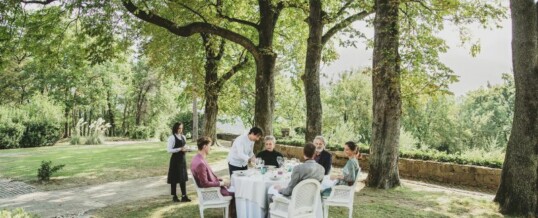
By midday, the road softens toward Slovenian Istria. The atmosphere changes subtly here. The air feels warmer. Mediterranean influences begin appearing in the architecture, the food, the pace of conversation. Lunch takes place at a private olive oil estate where generations of one family have cultivated the same land for decades. There are no polished tourist performances waiting here. No rehearsed authenticity. Just deeply rooted hospitality.
Olive oil tasting in Slovenia feels surprisingly emotional once someone explains what you are actually tasting — the bitterness, the pepper notes, the influence of sea air and mineral soil.
Participants gather around long wooden tables beneath olive trees while plates begin appearing slowly:
- local cheeses
- warm bread
- prosciutto
- grilled vegetables
- sea salt harvested nearby
- wine that tastes inseparable from the landscape around it
Nobody rushes lunch here. That would feel almost offensive to the setting. And this pause matters more than planners sometimes realise. Because incentive programmes are not built from headline moments alone. They are built from transitions. Breathing space. Shared stillness between activities. Slovenia understands this instinctively.
Vipava Valley: Europe’s Quietest Wine Revelation
The drive into Vipava Valley arrives almost unexpectedly. One moment the landscape feels Mediterranean. The next, vineyards begin rolling outward beneath dramatic mountain ridges, framed by villages so picturesque they would feel artificial elsewhere. But Vipava has escaped mass tourism largely because Slovenia itself remains pleasantly underexposed. Which means the experience still feels intimate. Private wine storytelling sessions here are less about formal tasting techniques and more about narrative. Local winemakers speak about weather patterns the way other people discuss family history. Soil composition becomes philosophy. Indigenous varietals acquire personality.
And somewhere during the evening, usually around the second or third course, the group dynamic changes. People relax differently in wine country. Titles soften. Hierarchies blur slightly. Conversations deepen. This is where incentive programmes quietly succeed or fail — not during presentations, but during the unstructured moments where genuine connection finally appears. Vipava creates those moments exceptionally well.
Why This Incentive Programme Works So Powerfully
Freedom Within Structure
Traditional incentive programmes often overmanage participants. Every movement scheduled. Every interaction engineered. Every “spontaneous” moment suspiciously timed between coffee breaks. The self-drive format changes this dynamic entirely. Participants retain a sense of autonomy while remaining inside a professionally managed structure. They feel discovery rather than choreography. Psychologically, this matters enormously. Experiences feel more meaningful when people believe they arrived at them naturally. Even if, behind the scenes, the route planning required military-grade precision and approximately forty supplier WhatsApp conversations. The glamour of event logistics remains tragically underappreciated.
Story-Rich Experiences Create Lasting Impact
Research consistently shows that experiential rewards outperform cash incentives in long-term emotional impact. And it is easy to understand why. Nobody reminisces emotionally about a quarterly bonus. But years later, participants still remember: the vineyard dinner at sunset, the absurdly beautiful road through the Karst, learning how olive oil is actually made, getting slightly lost in a vintage Alfa Romeo while following colleagues through Slovenian villages, Experiences become part of personal narrative.
That is what companies are really investing in.
Hero Element: The Vintage Cars Themselves
The oldtimer cars are not decorative props in this programme. They are emotional catalysts. Classic cars slow people down physically and psychologically. Drivers become more attentive to landscapes, sounds, weather, texture. The journey becomes sensory again. Modern vehicles isolate. Vintage vehicles immerse. There is also something wonderfully cinematic about arriving at a vineyard in a convoy of restored classics rather than executive transfer vans. The aesthetic alone transforms participant perception of the programme. And yes, everyone photographs the cars constantly. Naturally.
Why This Experience Stays With People
- Because participants feel genuine discovery rather than manufactured luxury
- Because Slovenia’s landscapes shift constantly without exhausting travel times
- Because food and wine experiences feel deeply personal
- Because driving creates emotional engagement with the destination
- Because conversations happen naturally in beautiful environments
- Because the programme balances freedom with seamless organisation
- Because people remember how a journey felt, not just where it stopped
The strongest incentive programmes are not necessarily the loudest.
They are the ones participants continue talking about months later — often unexpectedly, usually over dinner, always with a certain softness in their voice.
Slovenia was made for those kinds of experiences.
And sometimes the best way to understand a country is simply to drive through it slowly.
The Programme: Vintage Roads & Hidden Flavours
Morning: Engines, Espresso, and Anticipation
The day begins quietly in Ljubljana or Lipica.
Classic oldtimer cars wait in neat formation beneath soft morning light — polished chrome, leather interiors carrying the faint scent of age and craftsmanship. Guests arrive gradually, coffees in hand, moving between the vehicles with the kind of curiosity adults usually reserve for art galleries and expensive watches. There is something wonderfully disarming about vintage cars. Even serious executives become slightly childlike around them. The briefing is intentionally relaxed. Routes are explained. Safety guidance covered. Support teams introduced. Then the engines start one by one, and suddenly the programme acquires momentum — literal and emotional. The convoy pulls away slowly. And Slovenia begins unfolding.
Through the Karst: Stone, Wind, and Silence
The Karst region feels ancient in a way modern Europe sometimes struggles to preserve. Stone villages emerge from the landscape almost camouflaged into it — pale limestone walls, terracotta roofs, tiny church towers appearing briefly above vineyards before disappearing again around another bend in the road. The terrain here shaped more than scenery. It shaped language itself. The word “karst” originates from this exact region. And driving through it explains why. The landscape is dramatic without being theatrical. Wind-carved. Dry-stone walls tracing the roads like quiet architecture. Vineyards growing stubbornly from mineral-rich soil. Participants naturally begin spacing out along the route, each car finding its own rhythm. Some drive leisurely, windows down, music drifting into warm air. Others stop unexpectedly beside viewpoints simply because the light looks extraordinary. No two groups experience the route identically. That is part of its brilliance.
Lunch in Slovenian Istria: Olive Oil and Long Conversations
By midday, the road softens toward Slovenian Istria. The atmosphere changes subtly here. The air feels warmer. Mediterranean influences begin appearing in the architecture, the food, the pace of conversation. Lunch takes place at a private olive oil estate where generations of one family have cultivated the same land for decades. There are no polished tourist performances waiting here. No rehearsed authenticity. Just deeply rooted hospitality. Olive oil tasting in Slovenia feels surprisingly emotional once someone explains what you are actually tasting — the bitterness, the pepper notes, the influence of sea air and mineral soil. Participants gather around long wooden tables beneath olive trees while plates begin appearing slowly: local cheeses, warm bread, prosciutto, grilled vegetables, sea salt harvested nearby, wine that tastes inseparable from the landscape around it, Nobody rushes lunch here.
That would feel almost offensive to the setting. And this pause matters more than planners sometimes realise. Because incentive programmes are not built from headline moments alone. They are built from transitions. Breathing space. Shared stillness between activities. Slovenia understands this instinctively.
Vipava Valley: Europe’s Quietest Wine Revelation
The drive into Vipava Valley arrives almost unexpectedly. One moment the landscape feels Mediterranean. The next, vineyards begin rolling outward beneath dramatic mountain ridges, framed by villages so picturesque they would feel artificial elsewhere. But Vipava has escaped mass tourism largely because Slovenia itself remains pleasantly underexposed. Which means the experience still feels intimate. Private wine storytelling sessions here are less about formal tasting techniques and more about narrative. Local winemakers speak about weather patterns the way other people discuss family history. Soil composition becomes philosophy. Indigenous varietals acquire personality.
And somewhere during the evening, usually around the second or third course, the group dynamic changes. People relax differently in wine country. Titles soften. Hierarchies blur slightly. Conversations deepen. This is where incentive programmes quietly succeed or fail — not during presentations, but during the unstructured moments where genuine connection finally appears. Vipava creates those moments exceptionally well.
Why This Incentive Programme Works So Powerfully
Freedom Within Structure
Traditional incentive programmes often overmanage participants. Every movement scheduled. Every interaction engineered. Every “spontaneous” moment suspiciously timed between coffee breaks. The self-drive format changes this dynamic entirely. Participants retain a sense of autonomy while remaining inside a professionally managed structure. They feel discovery rather than choreography. Psychologically, this matters enormously. Experiences feel more meaningful when people believe they arrived at them naturally. Even if, behind the scenes, the route planning required military-grade precision and approximately forty supplier WhatsApp conversations. The glamour of event logistics remains tragically underappreciated.
Story-Rich Experiences Create Lasting Impact
Research consistently shows that experiential rewards outperform cash incentives in long-term emotional impact. And it is easy to understand why. Nobody reminisces emotionally about a quarterly bonus. But years later, participants still remember: the vineyard dinner at sunset, the absurdly beautiful road through the Karst, learning how olive oil is actually made, getting slightly lost in a vintage Alfa Romeo while following colleagues through Slovenian villages, Experiences become part of personal narrative. That is what companies are really investing in.
Hero Element: The Vintage Cars Themselves
The oldtimer cars are not decorative props in this programme. They are emotional catalysts. Classic cars slow people down physically and psychologically. Drivers become more attentive to landscapes, sounds, weather, texture. The journey becomes sensory again. Modern vehicles isolate. Vintage vehicles immerse. There is also something wonderfully cinematic about arriving at a vineyard in a convoy of restored classics rather than executive transfer vans. The aesthetic alone transforms participant perception of the programme. And yes, everyone photographs the cars constantly. Naturally.
Why This Experience Stays With People
- Because participants feel genuine discovery rather than manufactured luxury
- Because Slovenia’s landscapes shift constantly without exhausting travel times
- Because food and wine experiences feel deeply personal
- Because driving creates emotional engagement with the destination
- Because conversations happen naturally in beautiful environments
- Because the programme balances freedom with seamless organisation
- Because people remember how a journey felt, not just where it stopped
The strongest incentive programmes are not necessarily the loudest.
They are the ones participants continue talking about months later — often unexpectedly, usually over dinner, always with a certain softness in their voice.
Slovenia was made for those kinds of experiences.
And sometimes the best way to understand a country is simply to drive through it slowly.
AUG
2026