
Morning coffee in Ljubljana. Lunch beside an Alpine lake. Sunset cocktails on the Adriatic. In most countries, that would sound ambitious. In Slovenia, it is simply Tuesday with a good itinerary.
And perhaps that is precisely why event planners keep circling back to this small, startlingly capable country tucked between Italy, Austria, Croatia, and
Hungary. Slovenia does not shout for attention. It never has. It simply works — elegantly, efficiently, and with a kind of quiet confidence larger destinations
often lost somewhere between terminal three and their fourth convention hall extension.
For corporate events in 2026, that matters more than ever. There is a particular fatigue settling over the European events industry. Not burnout exactly. More… exhaustion from sameness. The same oversized capitals. The same overbooked hotels. The same networking dinners under industrial lighting while someone politely pretends the chicken is acceptable. Event planners are under pressure to do more with less while somehow making every programme feel more meaningful, more personal, more memorable. Delegates expect experiences now, not logistics disguised as hospitality. This is where Slovenia enters the conversation. Not dramatically. Slovenia is not dramatic by nature. It is measured. Layered. Surprisingly sophisticated. A country where Alpine silence, Mediterranean ease, and Central European refinement coexist within driving distances so short they almost feel suspicious.
And for event professionals, that compactness changes everything. Because Slovenia allows programmes to move. Not just geographically. Emotionally. A meeting in Ljubljana can become a lakeside dinner in Bled without anyone losing half a day in transit. A strategy session can end with wine in the Vipava Valley before the conversation has had time to cool. Teams stay engaged because the environment keeps changing around them — gently, naturally, almost cinematically.
There are no marathon transfer days here. No “travel recovery mornings.” No delegates staring blankly out of bus windows wondering why the “exclusive countryside venue” required three and a half hours of motorway existentialism. Slovenia respects attention spans. A surprisingly rare quality in destination management.
Why Slovenia Works So Exceptionally Well for Corporate Events
Compact Geography That Actually Improves Programmes
Most destinations advertise variety.
Slovenia operationalises it.
Within roughly two hours, groups can move between:
- Ljubljana’s refined urban energy
- Lake Bled’s postcard calm
- the deep Alpine atmosphere of Bohinj
- the wine regions of Vipava and Goriška Brda
- the Adriatic coast around Piran and Portorož
- the dramatic limestone landscapes of the Karst
For planners, this means multi-destination programmes become realistic instead of exhausting. And psychologically, movement matters. Humans remember contrast. The brain anchors memories through environmental shifts.
A welcome dinner beneath castle walls. A strategy workshop beside a lake. An olive oil tasting in sunlit Istria. A gala evening beside the sea. The programme begins to feel like a narrative rather than a schedule. Which is exactly what the strongest events become.
Ljubljana: Europe’s Quietly Brilliant Event Capital
Ljubljana is often the moment expectations recalibrate.
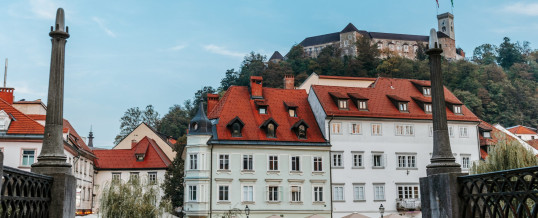
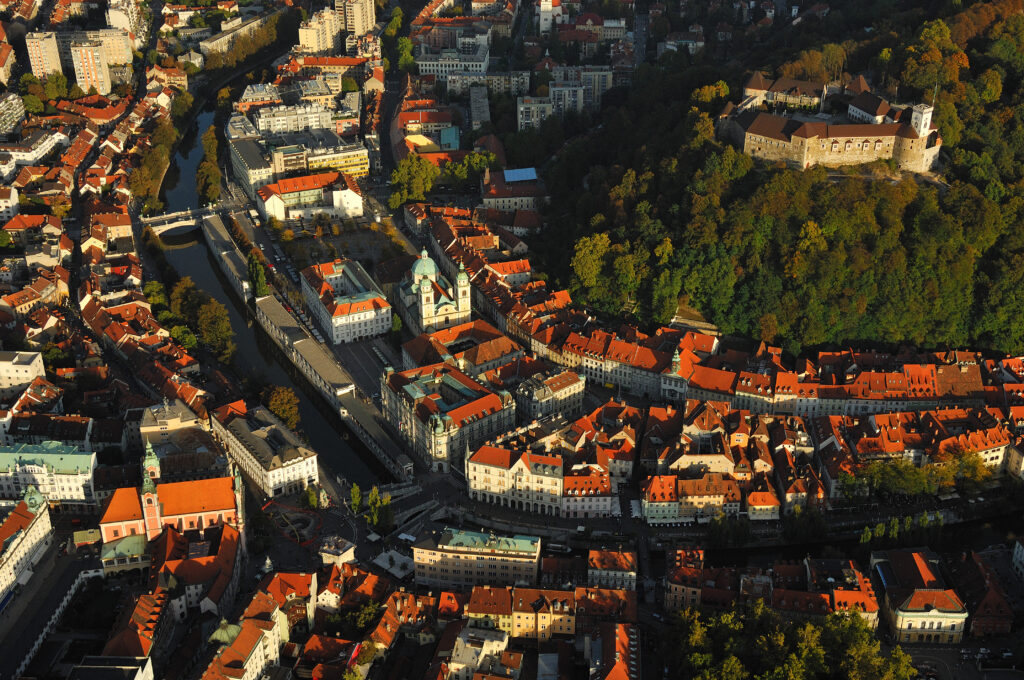
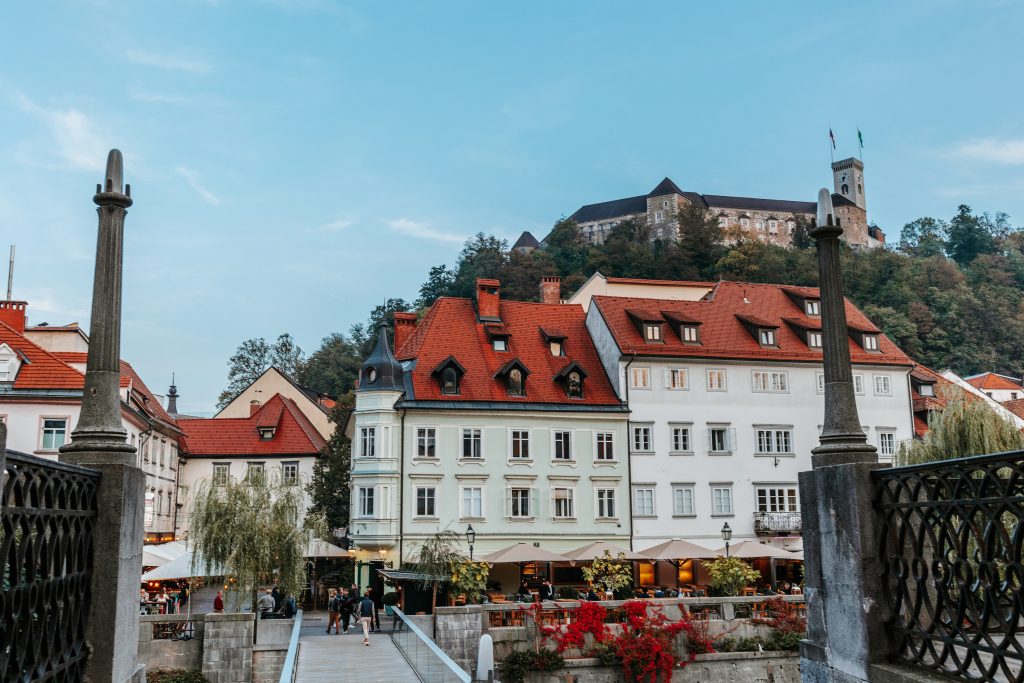
Not because it overwhelms visitors — it does the opposite. The city feels human-sized in the best possible way. Walkable. Calm. Clean without feeling sterile. The kind of capital where executives arrive tense and leave wondering why their shoulders suddenly dropped two inches. The old town folds around the Ljubljanica River in soft curves of Baroque facades, café terraces, bridges, and market squares. Early mornings smell faintly of fresh bread and roasted coffee. Evenings stretch slowly along the riverside with wine glasses catching the last light.
And then there is the infrastructure beneath the charm. Modern congress facilities. Hybrid-ready AV capabilities. High-speed connectivity. Sophisticated hotel inventory. Efficient transport links. Professional supplier networks. Ljubljana delivers operational reliability without losing atmosphere.
That balance is rarer than event brochures would like you to believe.
Accessibility Without the Chaos
Corporate travel in 2026 is increasingly shaped by one thing nobody enjoys discussing: friction.
Long queues. Delays. Overcrowding. Airport fatigue. Slovenia quietly reduces all of it. Ljubljana Jože Pučnik Airport connects efficiently to major European hubs, while Venice, Zagreb, and Vienna create additional access points within practical driving range. This flexibility matters enormously for international groups arriving from multiple regions. But the real luxury is what happens after arrival. Groups land and reach Lake Bled in under an hour.
No domestic flights.
No complicated rail transitions.
No logistical gymnastics involving colour-coded luggage tags and passive-aggressive WhatsApp groups.
Just movement that feels easy. And ease, increasingly, is premium.
Sustainability Here Feels Natural — Not Performed
Some destinations discovered sustainability because the market demanded it. Slovenia discovered the market finally cared about what it had already been doing. Forests cover nearly 60% of the country. Local sourcing is embedded into food culture. Boutique hospitality naturally limits overtourism. Outdoor experiences are designed around preservation because Slovenians tend to view nature less as a product and more as a shared inheritance. There is a quiet integrity to it. Corporate groups notice this immediately. Farm-to-table dinners are not staged concepts here. They are simply dinner. Wine producers often pour wines made a few hundred metres from where guests are standing. Alpine lodges still smell faintly of woodsmoke and pine because they exist inside living landscapes rather than curated simulations of one. For companies with ESG goals or sustainability commitments, Slovenia offers something increasingly valuable:
Authenticity without theatre.
The Rise of Boutique Corporate Experiences
Large-scale destinations can impress.
But boutique destinations connect.
That distinction is becoming increasingly important as incentive travel evolves away from spectacle and toward emotional resonance.
Slovenia excels precisely because it is not oversized.
Smaller group flows mean:
- more personalised service
- greater venue exclusivity
- stronger local interaction
- smoother logistics
- less participant fatigue
- more flexibility when plans inevitably change
And they always do. There is also something psychologically powerful about discovering a destination before everyone else does. Participants return home feeling they experienced something slightly ahead of the curve. Something not yet diluted by overtourism or overexposure. Slovenia still has that quality. For now.
Hero Experience: The Multi-Region Incentive Programme
The real magic of Slovenia reveals itself when programmes begin to move between regions.
Imagine this: Your group begins in Ljubljana with rooftop cocktails as church bells echo softly across the old town. The next morning, they drive north into the Julian Alps where Lake Bled appears almost absurdly beautiful through the trees — one of those landscapes that makes people instinctively reach for their phones before quietly putting them back down again because the screen somehow feels inadequate. Afternoon meetings happen beside the lake. The following day shifts entirely in mood: wine country. Rolling Vipava hills. Stone villages. Long lunches under olive trees where conversation slows naturally because nobody wants to be the first person to suggest checking emails. And then finally the coast. Piran at sunset feels less like a corporate destination and more like someone accidentally wandered into an Italian film set with excellent seafood. This emotional pacing is Slovenia’s greatest hidden strength. The country creates rhythm exceptionally well. Energy. Calm. Focus. Celebration. All within one coherent programme.
Why This Experience Stays With People
- Because participants experience multiple worlds without exhausting travel days
- Because Slovenia feels exclusive without feeling inaccessible
- Because nature here still feels genuinely untouched
- Because local interactions are warm rather than performative
- Because the country allows events to breathe
- Because teams remember how a place made them feel long after they forget the conference agenda
- Because logistics become invisible — which is usually the sign they were done properly
The Future of Corporate Events Is Smaller, Smarter, More Human
The events industry is changing rapidly.
Bigger is no longer automatically better.
Louder is no longer impressive.
Generic luxury feels increasingly forgettable.
The strongest programmes in 2026 are emotionally intelligent. They balance efficiency with atmosphere. Structure with spontaneity. Business outcomes with genuine human experience. Slovenia sits precisely at that intersection. And perhaps that is why so many experienced planners return here after their first programme. Not because Slovenia tries too hard. But because it doesn’t have to. If you are exploring destinations for your next corporate event, incentive programme, or executive retreat, Slovenia offers something increasingly difficult to find in Europe: Complex experiences delivered with remarkable simplicity. And that changes everything.
Why is Slovenia good for corporate events?
Slovenia combines Alpine, Mediterranean, and urban experiences within short travel distances, making multi-location programmes easy to execute while reducing logistical complexity.
What group sizes work best in Slovenia?
Slovenia works exceptionally well for groups between 10 and 300 participants, with boutique venues for executive retreats and modern congress infrastructure for larger conferences.
Is Slovenia suitable for incentive travel?
Yes. Slovenia’s combination of nature, gastronomy, wellness, wine culture, and outdoor activities makes it ideal for story-driven incentive programmes.
How accessible is Slovenia for international groups?
Ljubljana Airport connects to major European hubs, while Venice, Vienna, and Zagreb airports provide additional access options within driving distance.
What makes Slovenia different from other European event destinations?
Its compact geography, sustainability credentials, authentic local culture, and ability to combine multiple distinct environments in one seamless programme.
JUL
2026